CONWAY COUNTY HISTORY MUSUEM
Ancient Seed Pod
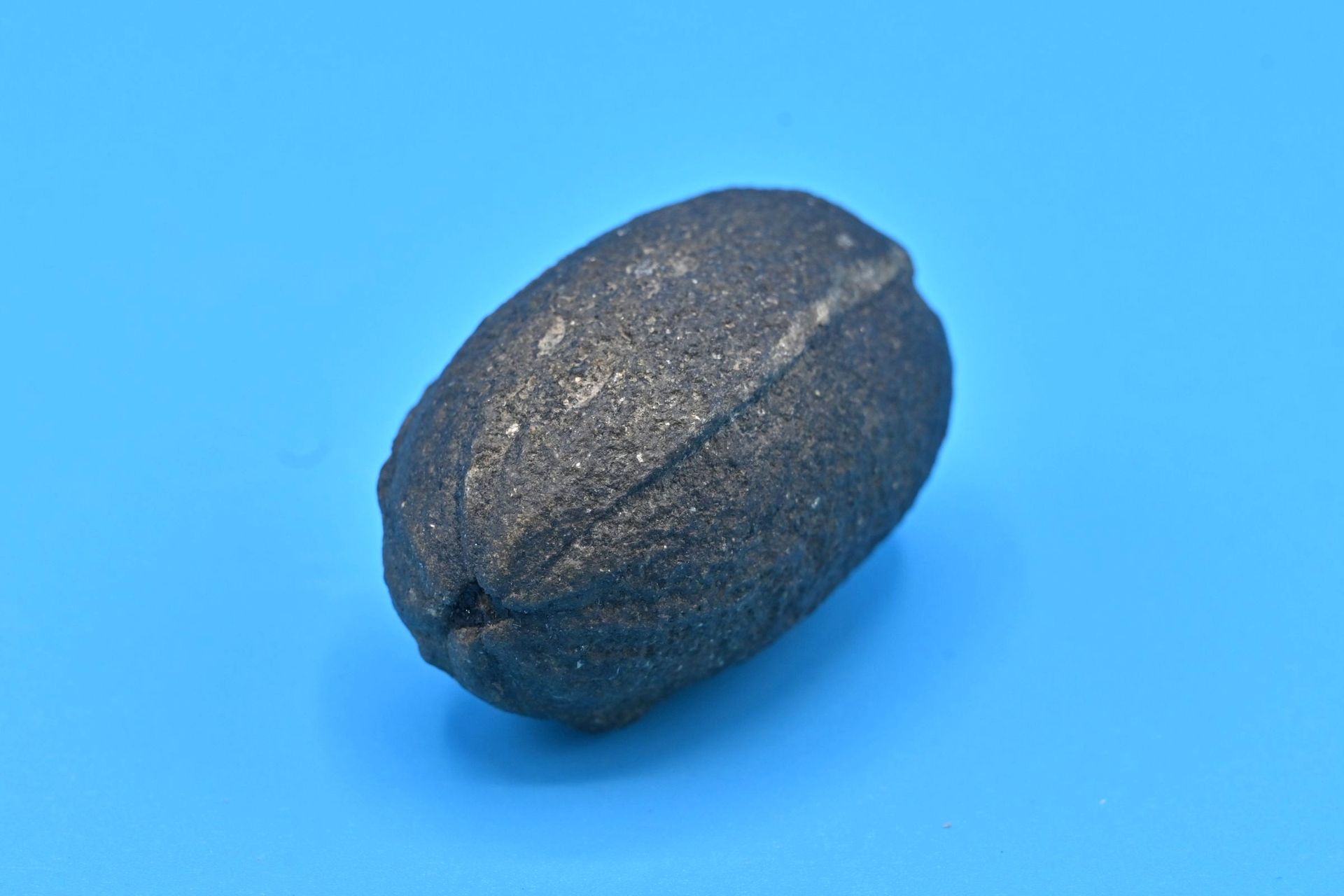
This is a very small (pecan-sized) fossilized seed pod. It wins, by far, the award for oldest item in the museum, being about 320 million years old. But why does it belong in the Conway County History Museum?
A Little Pod With a Lot of History
While much of the Museum does indeed represent the written history of Conway County, we also have a display section containing items from the County which are older than written histories of the area. We have numerous Native American artifacts that predate written history or are from early recorded times.
But why a fossilized seed pod? Dr. T. W. Hardison, who is recognized as the founder of the Arkansas State Park system, is credited with first discovering pods like this one in 1936 on Petit Jean Mountain in Conway County. At first, because of its size and general shape, he thought they were Petrified Pecans. But they didn’t look quite right for pecans, so he sent samples to several institutions, including the Smithsonian and the US Geological Survey. All reports came back with the same answer: these were fossils of Trigonocarpus, a rare seed pod from the Pennsylvanian period of Earth’s development.
While in general well-preserved examples like this one, and those found by Dr. Hardison, are rare, he and others found many at that time in a canyon at Petit Jean. The provenance of this example is not known, but it likely came from the same creek area as that explored by Dr. Hardison.
The plant it came from was a type of fern, and while it is now converted to hard, heavy minerals (fossilization), originally it was lightweight. You can see a rib running the length of the pod in the photo. This is where there was a wing-like extension, allowing the wind to carry the pods through the air to plant new ferns over a broad area.
Check Out Exhibits from Past Months!
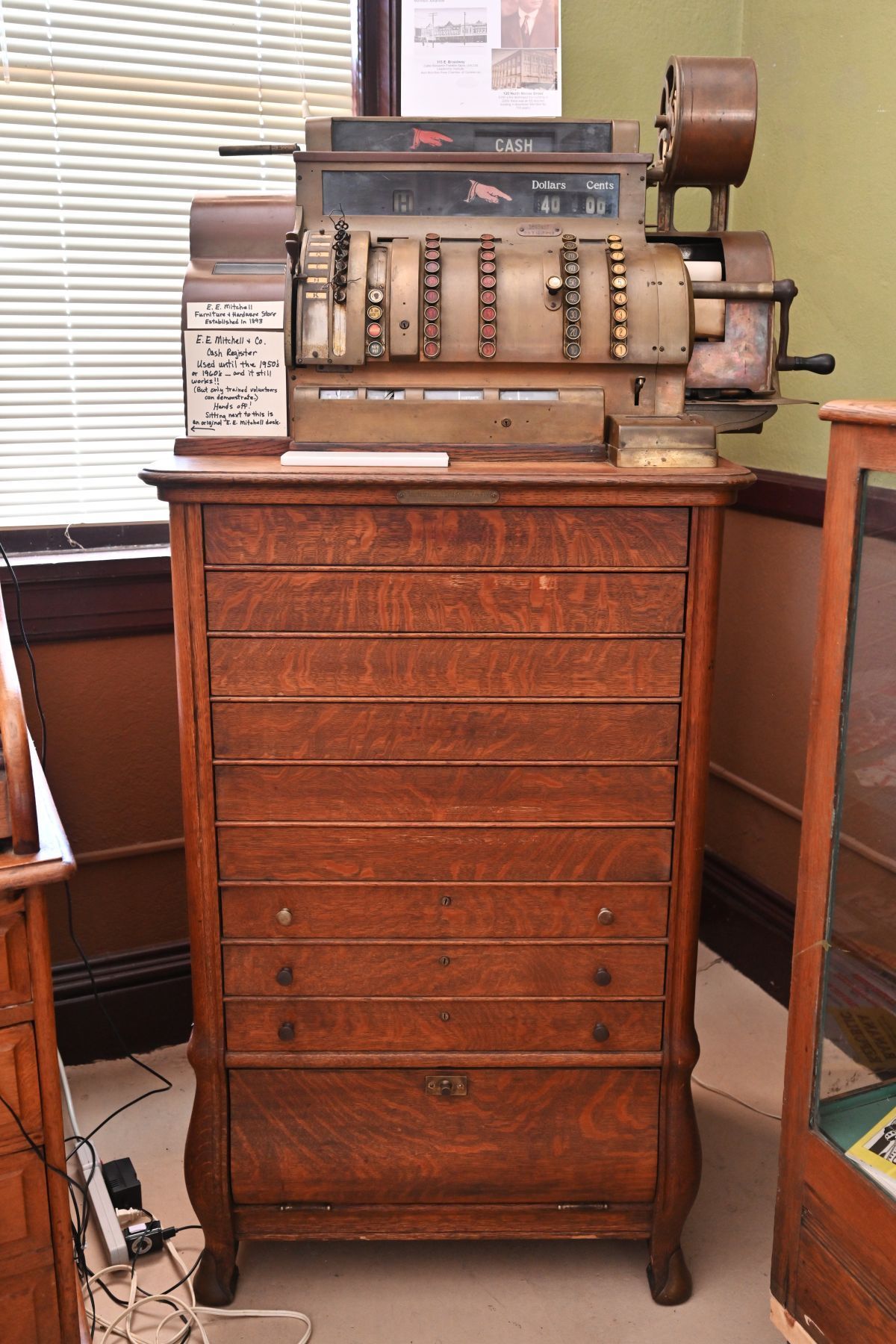
EE Mitchel Cash Register